
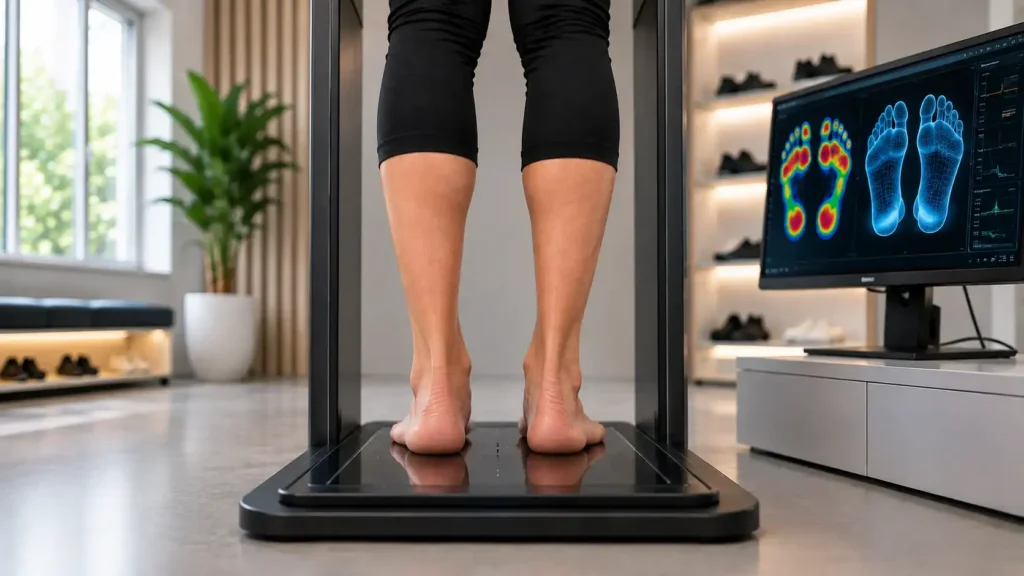
Most people only think about their feet when something hurts. But here’s what many don’t realise — foot problems often develop silently, long before pain shows up. By the time discomfort finally kicks in, the underlying imbalance may have already been affecting your knees, hips, or back for months, or even years.
A 3D foot scan isn’t just for people already in pain. It’s a simple way to catch problems early — before they turn into something bigger. Here are five signs it might be worth getting one, even if your feet feel perfectly fine right now.
1. Your Shoes Wear Out Unevenly
Take a look at the soles of your most-worn shoes. If one side — especially the inner or outer edge — wears down noticeably faster than the rest, it’s a strong sign that your weight isn’t distributing evenly through your feet while you walk.
This kind of imbalance often goes unnoticed because it doesn’t cause pain right away. But over time, uneven pressure can quietly strain your ankles, knees, and lower back.
2. You Have Unexplained Knee, Hip, Or Back Pain
Here’s something surprising: a lot of knee, hip, and back pain doesn’t actually start in the knee, hip, or back. Since your feet form the foundation for how you stand and move, small imbalances here can travel upward, creating strain in joints far away from the actual root cause.
If you’ve been treating knee or back pain without lasting relief, and no one has actually looked at how your feet are functioning, that might be the missing piece.
3. You Stand Or Walk For Long Hours
If your job or lifestyle involves being on your feet for extended periods — whether you’re a teacher, retail worker, healthcare professional, or just someone who walks a lot — even minor foot imbalances can compound into real problems over time.
A foot scan can help identify whether your feet are handling that load efficiently, or whether some areas are absorbing more pressure than they should — before that pressure turns into pain.
4. You’re Diabetic
For people with diabetes, foot health isn’t just about comfort — it’s about prevention. Reduced sensation in the feet, common with diabetes, means minor pressure points or areas of stress often go completely unnoticed until they develop into more serious complications.
A 3D foot scan can reveal these pressure points early, allowing for preventive care like custom insoles, well before any visible symptoms appear.
5. You’re Active In Sports Or Fitness
Whether you run, play sports, or train regularly, your feet are absorbing repeated impact with every session. Even small biomechanical inefficiencies — the kind you can’t feel or see — can quietly increase your risk of injuries like shin splints, ankle sprains, or knee pain over time.
A foot assessment can identify these inefficiencies early, helping you train smarter and reduce your risk of injury before it sidelines you.
Why Catching This Early Matters
Foot problems are a bit like slow leaks — they don’t cause a flood overnight, but left unchecked, they gradually create bigger issues. The advantage of identifying imbalances before pain sets in is simple: correction is usually easier, faster, and more effective at this stage than treating pain that’s already developed and spread to other parts of your body.
What Does A 3D Foot Scan Actually Involve?
It’s simpler than most people expect. You simply stand and walk normally on a digital scanning platform, which captures detailed data on pressure distribution, alignment, and movement patterns in real time. The process is quick, completely painless, and doesn’t require any special preparation.
Based on the results, your therapist can recommend next steps — which might be as simple as footwear guidance, or may include custom insoles or posture training if a correction is needed.
Conclusion
You don’t need to wait for pain to understand your feet better. A 3D foot scan offers a clear, data-backed look at how your body’s foundation is really functioning — helping you catch small issues before they become bigger ones.