
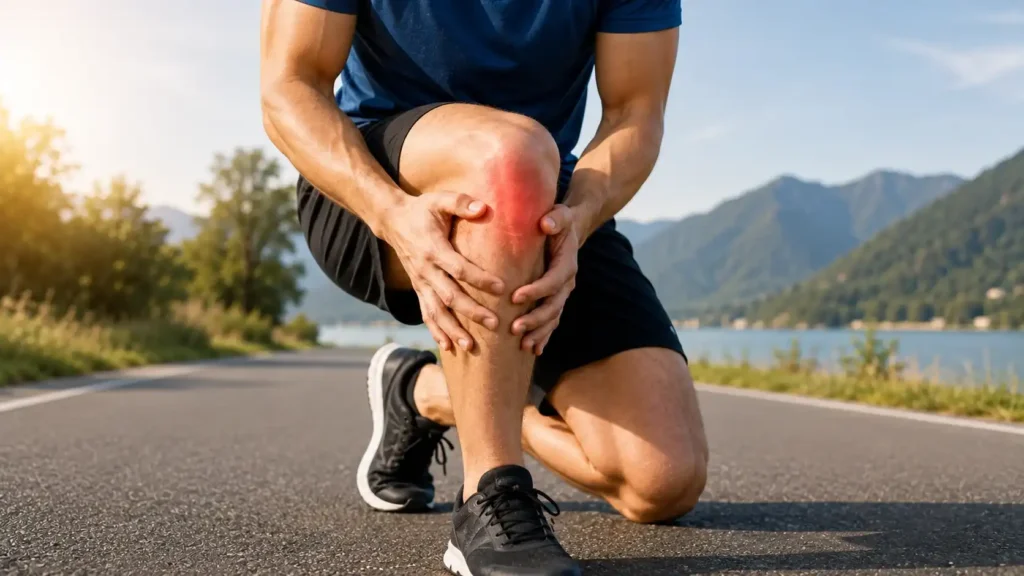
That dull ache around your kneecap that shows up after a run, gets worse going down stairs, or flares up after sitting for too long — if this sounds familiar, you might be dealing with what’s commonly known as runner’s knee.
And here’s some good news: despite the name, you don’t need to be a runner to get it, and you definitely don’t need to give up running to recover from it. You just need to understand what’s actually going on.
What Is Runner’s Knee?
Runner’s knee, medically known as patellofemoral pain syndrome, refers to pain around or behind the kneecap. It happens when the kneecap doesn’t move smoothly within its groove on the thigh bone during movement — leading to irritation, inflammation, and that familiar ache.
It’s called runner’s knee because it’s extremely common among runners, but it also affects cyclists, hikers, and anyone who does repetitive knee-bending activity — even people who simply sit for long hours at a desk.
What Causes Runner’s Knee?
Runner’s knee rarely comes from one single event. It usually builds up gradually from a combination of factors:
Muscle imbalance — Weak thigh muscles (quadriceps), especially on the inner side, can cause the kneecap to shift out of its natural alignment during movement.
Poor foot mechanics — Flat feet or overpronation (where your foot rolls inward too much while walking or running) changes how force travels up through your knee.
Tight muscles — Tight hamstrings, calves, or IT bands can pull on the knee joint and affect how the kneecap tracks.
Training errors — Increasing running distance, intensity, or frequency too quickly, without giving your body time to adapt.
Worn-out or unsuitable footwear — Shoes that no longer provide proper support can change your gait and add strain to your knees.
Signs You May Have Runner’s Knee
- Dull, aching pain around or behind the kneecap
- Pain that worsens with running, squatting, or climbing stairs
- Discomfort after sitting with knees bent for a long time
- A popping or grinding sensation in the knee during movement
- Mild swelling around the kneecap
Prevention Tips: Keeping Runner’s Knee Away
1. Strengthen your quadriceps and hips Strong thigh and hip muscles help keep your kneecap properly aligned during movement, reducing unnecessary stress on the joint.
2. Don’t skip stretching Keeping your hamstrings, calves, and IT band flexible reduces the pulling forces that can affect kneecap tracking.
3. Increase training gradually Follow the general rule of increasing running distance or intensity by no more than about 10% per week, giving your body time to adapt.
4. Get your footwear checked Worn-out shoes or those that don’t suit your foot type can quietly contribute to knee pain over time. A gait or foot assessment can help identify the right footwear for you.
5. Warm up properly A proper warm-up prepares your muscles and joints for activity, reducing the risk of strain during your run.
Recovery Tips If You Already Have Runner’s Knee
Reduce, don’t eliminate, activity Complete rest often isn’t necessary — and prolonged inactivity can actually weaken muscles further. Instead, reducing high-impact activity while staying active in low-impact ways (like swimming or cycling) usually works better.
Ice after activity Applying ice for 15-20 minutes after activity can help manage inflammation and discomfort in the early stages.
Get a proper assessment Since runner’s knee often stems from muscle imbalance or foot mechanics, a physiotherapy assessment can identify your specific contributing factors — rather than guessing at generic fixes.
Follow a structured strengthening plan Targeted exercises for your quadriceps, hips, and core help correct the underlying imbalance causing your pain, not just the symptom itself.
Address footwear and gait issues If foot mechanics are contributing to your knee pain, correcting them — sometimes with the help of custom insoles — can make a significant difference in recovery and prevention.
When Should You See A Physiotherapist?
Consider getting a professional assessment if:
- Your knee pain hasn’t improved after a week or two of rest
- Pain is affecting your ability to walk, climb stairs, or exercise normally
- You’ve noticed swelling or a persistent grinding sensation
- You want to return to running safely without the pain coming back
Conclusion
Runner’s knee is common, but it’s not something you have to just push through or permanently give up your favorite activities for. With the right combination of strengthening, gait correction, and gradual return to activity, most people recover fully and get back to running pain-free.